Physical Address
304 North Cardinal St.
Dorchester Center, MA 02124
Physical Address
304 North Cardinal St.
Dorchester Center, MA 02124
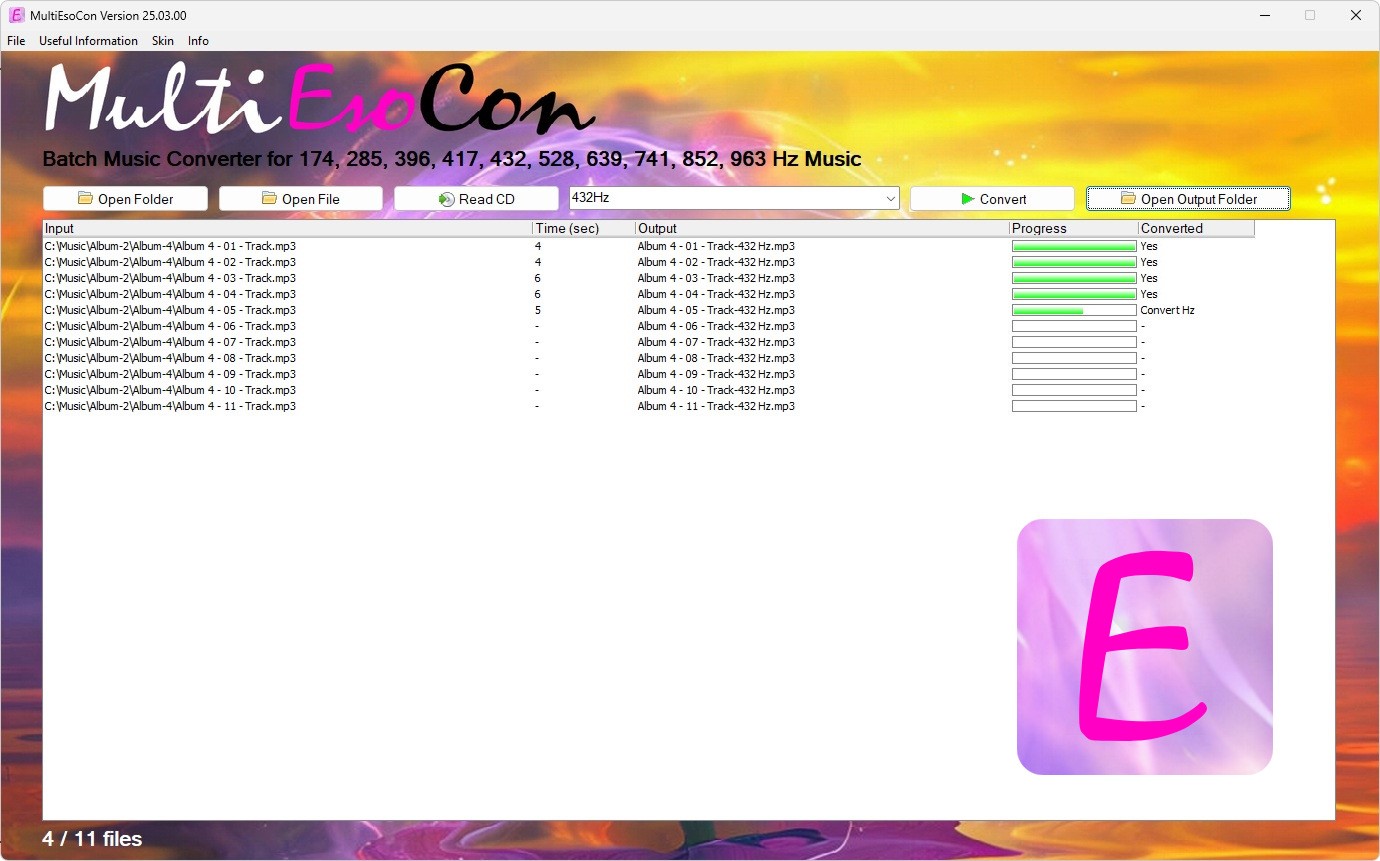
A 432 Hz converter is a digital audio tool designed to retune music from the standard 440 Hz reference pitch to 432 Hz. In modern music production, the note A4 is typically set at 440 Hz as the international tuning standard. A 432 Hz converter adjusts this reference point by slightly lowering the pitch of the entire audio track while maintaining the original tempo and musical structure. This process is accomplished through precise digital signal processing rather than simple speed manipulation.
Platforms such as 432-hz-converter.com provide browser-based solutions that allow users to upload audio files, apply pitch adjustments, and download the converted result without requiring advanced software installations. These tools are built around audio processing algorithms that ensure accurate retuning while preserving sound quality.
The primary function of a 432 Hz converter is pitch shifting. When converting from 440 Hz to 432 Hz, the software reduces pitch by approximately 31.77 cents, which equals about 0.32 of a semitone. Instead of altering playback speed, which would distort rhythm and duration, the converter uses advanced pitch-shifting algorithms to lower frequency values proportionally across the entire audio spectrum.
This ensures that every note in the recording maintains its harmonic relationship. Chords, melodies, and instrumental layers remain intact because the adjustment is applied uniformly rather than selectively.
A 432 Hz converter relies on digital signal processing methods such as phase vocoder processing or time domain pitch shifting. These algorithms analyze the waveform, break it into smaller segments, and modify the frequency components without stretching or compressing the track’s duration.
The phase vocoder approach works by transforming audio into the frequency domain using Fourier analysis. The converter then adjusts the frequency bins before reconstructing the signal. This technique allows precise control over pitch without introducing major artifacts.
Time domain methods, on the other hand, manipulate waveform segments directly. Advanced converters often combine multiple approaches to optimize clarity and reduce distortion.
One important feature is tempo preservation. High-quality converters ensure that the rhythm and timing of the original recording remain unchanged. This makes the converted file suitable for professional projects or synchronization with video and other audio tracks.
Another feature is file format compatibility. Many tools, including 432-hz-converter.com, support common formats such as MP3 and WAV. Some converters also handle FLAC or other lossless formats to maintain maximum fidelity.
Batch processing is another useful capability. Users can upload multiple files and convert them in sequence, which is especially helpful for musicians returning entire albums or playlists.
User-friendly interfaces are also common. Web-based converters typically provide drag-and-drop upload systems, adjustable output quality settings, and instant download options.
Precision is critical in pitch conversion. Even small inconsistencies can result in noticeable tonal irregularities. A well-designed 432 Hz converter applies exact frequency scaling to ensure mathematical accuracy. The link between 440 Hz and 432 Hz, which is about 0.9818, is used to figure out the conversion ratio. Every frequency in the track is multiplied by this ratio to achieve consistent retuning.
This proportional adjustment ensures that intervals remain unchanged. For example, if two notes originally formed a perfect fifth, they will continue to do so after conversion.
Some converters operate in real time through plugins integrated into digital audio workstations. Others function as offline processors where users upload a file, apply a conversion, and download a new version. Web-based tools such as 432-hz-converter.com fall into the offline category, making them accessible without specialized production software.
Real-time solutions are often used in studio environments, while web tools are convenient for general users who want quick and straightforward processing.
A 432 Hz converter is a specialized audio processing tool designed to retune music by adjusting its reference pitch from 440 Hz to 432 Hz. Through advanced digital signal processing, precise frequency scaling, and tempo preservation techniques, it ensures accurate conversion without altering musical structure. With features such as multi-format support, batch processing, and browser-based accessibility through platforms like 432-hz-converter.com, these tools provide an efficient and technically sound solution for pitch adjustment needs.
