Physical Address
304 North Cardinal St.
Dorchester Center, MA 02124
Physical Address
304 North Cardinal St.
Dorchester Center, MA 02124

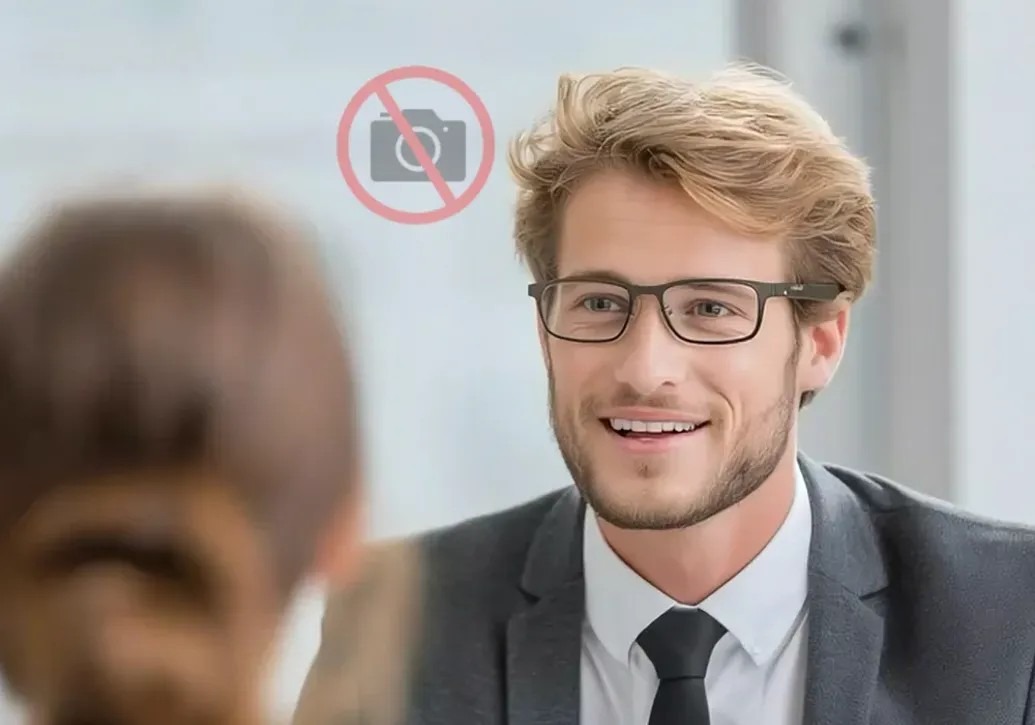
Camera-free smart glasses sound like the obvious choice for anyone worried about wearable privacy. Remove the lens, and the biggest concern seems to disappear: no first-person photos, no video capture, and no camera pointed at the people around you.
That is a meaningful difference, but only one part of the privacy picture. Many camera-free smart glasses still include microphones, companion apps, voice assistants, and AI features that process spoken information. The better question is what the device can still collect and when those features are active.
A camera-free design removes visual capture from the hardware. The glasses cannot take first-person photos or record video through an onboard camera because that sensor is not present.
For people around the wearer, this can reduce one of the most visible sources of discomfort associated with smart eyewear. A person in a meeting, cafe, classroom, or shared workspace does not have to wonder whether a small lens in the frame is filming the room.
A broader guide to camera-free smart glasses can help separate this hardware choice from the features different models still include. Some are open-ear audio devices; others support displays, assistants, translation, transcription, or meeting tools.
The absence of a camera does not mean the absence of sensors. Microphones are the most important example. They may be used for phone calls, voice commands, speech translation, meeting notes, or audio recording.
Behavior varies by model. Some features process information on a connected phone, while others may send data to remote servers for speech recognition or AI processing. Users should check privacy policies and app permissions instead of assuming camera-free means data-free.
Audio can contain information that is just as sensitive as an image. A conversation may reveal names, health information, business plans, passwords spoken aloud, or details about people who never agreed to be part of a recording.
Privacy therefore depends on how the glasses are used, not only on what hardware they omit. Recording laws and consent requirements vary by location, and workplaces, schools, clinics, and other organizations may have their own rules. A camera-free device can still be restricted for audio recording or AI use.
Dymesty Cook Edge camera-free AI glasses illustrate the distinction clearly. The frame has no camera, but it uses four microphones and open-ear speakers and supports features such as audio recording, transcription, summaries, real-time translation, and voice assistance. That combination removes visual recording while keeping microphone-based AI functions.
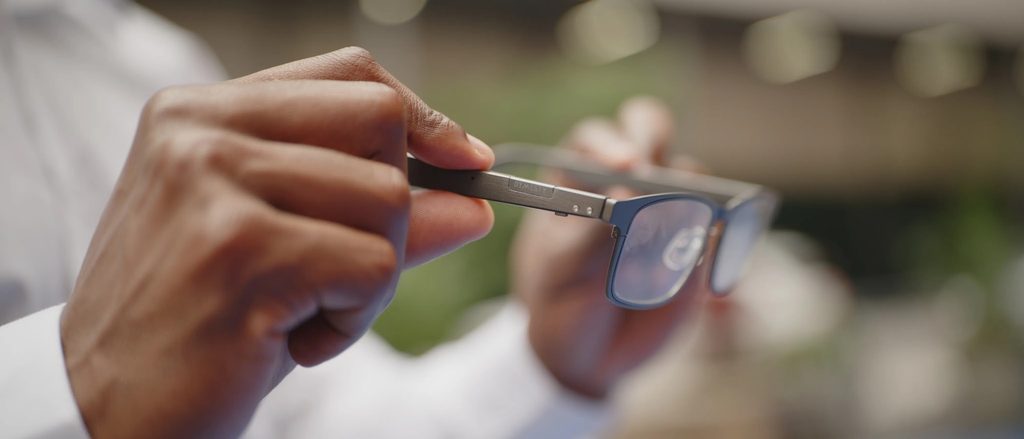
This design may suit users who do not want a camera on their face, but it is not automatically private in every situation. A meeting recording is still a recording, and translation still requires speech to be captured and processed. Consent and appropriate use still matter.
Before buying or wearing smart glasses in sensitive settings, check more than the product name. A short privacy review reveals more than a ‘camera-free’ label.
Clear answers to these questions are more useful than broad ‘privacy-first’ claims that do not explain data handling.
Camera-free smart glasses are more private in one specific sense: they remove the built-in ability to photograph or film the wearer’s surroundings. That reduces visual surveillance concerns and can make the device less intrusive in everyday social settings.
They are not automatically private in every other sense. Microphones, apps, cloud services, and AI processing can still create privacy questions. The right comparison is one data pathway removed versus the complete data system that remains.
They can include microphones capable of capturing speech for calls, voice commands, translation, transcription, or recording. Whether audio is actively recorded depends on the product, settings, and feature in use.
Some products can save recordings or transcripts through a companion app or connected service. Storage behavior is product-specific, so users should review the app settings and privacy policy.
No. A venue may restrict smart glasses, microphones, recording devices, wireless electronics, or AI tools regardless of whether a camera is present. Device permission should always be checked against the rules of the specific environment.
Removing the camera solves a real privacy problem, but not every privacy problem. Camera-free smart glasses cannot film the scene in front of the wearer, yet microphone-based features may still capture and process speech.
The safest way to evaluate smart eyewear is to look at every sensor, permission, recording control, and data-processing step. ‘No camera’ is useful information. It should be the beginning of the privacy check, not the end of it.
