Physical Address
304 North Cardinal St.
Dorchester Center, MA 02124
Physical Address
304 North Cardinal St.
Dorchester Center, MA 02124

Host previews fail rights when the corner mark melts. A photographer who already uploaded a collection will match the bug, the agency line, or the collection ID against the live tile. A ChatGPT Images 2.5 cleanup that softens a glare still fails if the same pass ate the claim in the corner. The mark is the judge. A cleaner preview does not get a vote on that claim.
Rights reviewers on an image host sit in a takedown queue, not in an art meeting. Their job is to decide whether a public tile still shows who owns the file. Old cleanup was a crop or a denoise slider. That work was ugly and slow and usually left the bug alone because nobody asked the slider to “finish” the corner. The new habit is a preview sentence: richer product light, a calmer backdrop, a tile that “looks professional.” The file looks host-ready until the rights desk opens the original. Then the agency line is gone, or the ID is a different string, or a second bug appeared because a blank corner “felt unfinished.” The tile is a rights problem. Calling it a filter does not shorten the takedown.
An image host is a claim machine. Every public preview tells a viewer who may use the file, who shot it, and which collection it belongs to. The corner mark is that sentence in eight or twelve letters. If a style pass melts the letters, the host is showing a file with no owner. If the pass invents a prettier mark, the host is showing a file with a false owner. Both outcomes are takedown fuel. A photographer will file. An agency will file. An advertiser who licensed the marked file will pull the spend because the preview no longer matches the contract still.
Platform reviewers cannot ship a prettier lie to keep a homepage grid looking even. They can reject the tile and send the uploader back. That reject costs the same-day feature slot and the next review in the queue. The hour spent on “professional light” does not come back. The mark either survived, or the preview is a rights event.
A corner mark is a limited grant on the host. It may be an agency wordmark. It may be a collection ID. It may be a photographer credit the uploader is required to keep visible at a minimum size. It is not decoration. It is not dirt in the corner that a “clean product tile” prompt is allowed to wipe. Rights desks treat it the way a newsroom treats a byline. You may grade the room. You may not rewrite the byline so the page looks calmer.
The mark also has a place. Bottom right on this collection. Top left on that agency pack. If the pass moves the bug to a “nicer” corner, the license packet that named the position is already wrong. Viewers who scrape tiles by corner position will miss the claim. Missed claims are how unmarked copies leave the host and show up in ads with no credit. That is not a taste miss. That is a leak.
Before conversational agents, the host’s own tools did two things that still hurt, just slower. Someone cropped for a square tile and ate the bug because the bug sat in the last eight percent of the frame. Someone ran a denoise or a “clarity” pass that softened the letters until the ID was a blur. Both were rights events. Both could be traced: the crop tool, the slider, the person on shift. The cost was a resubmit and a note in the queue. The cost was not a new owner invented by a sentence.
The new cost is harder to audit. A preview paragraph can wipe a mark, invent a mark, or move a mark, and the queue only sees a prettier PNG. Reviewers then spend the next sitting lining the tile up with the original upload. If the letters drifted, the tile is rejected and the feature slot is gone. If the letters drifted and the tile already went public, the desk is in takedown. Takedown is not a filter setting. Takedown is counsel, a pulled license, and a grid hole on a launch day.
Square tiles are the usual eater. The uploader wants a product that fills the frame. The mark lives on the edge. The crop “for a stronger object” drops the edge. The object looks stronger. The claim is gone. Rights reviewers catch this by putting the public tile next to the original upload and reading the four corners. If a corner that held letters is now product, the file cannot stay public. Do not call that a composition win. Call it a missing owner.
The expensive version is a crop that leaves a sliver of the mark, then a later pass “completes” the sliver into a new word. Completing a word is inventing an agency. Inventing an agency is a second rights event on top of the first. The queue does not have a box for that. The queue has reject.
Denoise and “clarity” fail quieter than a crop. The bug is still in the corner. The letters are no longer readable at the size the license required. A viewer on a phone cannot name the agency. A scraper cannot read the ID. The host is showing an unmarked file with a stain that used to be a claim. Reviewers treat unreadable the same as missing. Unreadable cannot be defended in a complaint.
Asking a model to “sharpen the whole tile so it looks official” often sharpens the product and redraws the bug. Redrawn bugs have different letter shapes. Different letter shapes are a different owner. The sitting spent on official-looking type does not return the first licensee who already used the melted tile in a deck.
| Old cleanup | What it usually costs | What the queue sees later |
| Hard square crop | A resubmit the same day | A missing corner, easy to prove |
| Denoise or clarity slider | A second pass and a note | A blur where the ID sat |
| Unbound preview sentence | A takedown if the tile went live | A new bug, a moved bug, or no bug |
Read the table as a queue card, not as a style menu. If the original upload does not already show a readable mark, do not ask a chat to invent a safer credit. Get the marked file from the photographer. Then ask for the glare.
The useful new work is local and named. Attach the host still that already holds the corner claim. Draw on the image to mark the thing that should change: the glare on the bottle, the scuff on the floor, the stray hand. Leave the corner out of the drawing. Then generate. The draw step is how a rights desk tells a model that the bug is not dirt. A sentence that says “clean the tile” will treat the bug as dirt. Dirt gets removed. Claims cannot be removed.
The other useful work is combine. The host often needs two people in one preview, a garment on a body, or a logo on a product that already carries an agency mark. Attach those photos together. Ask for the combine. Do not ask the model to “finish” a blank corner on the product shot. The product shot already finished that corner with a claim. A second bug is a second owner. A missing bug is no owner. Both fail the desk.
OpenAI released the model on September 8, 2026 and listed “more precise editing” beside faster generation. Precise, in that write-up, is a local change you can name. On a host queue that name is the glare, not the agency line. A preview that melts the corner treated the bug as dirt. Draw the defect. Leave the credit out of the circle. If the next turn redraws the ID, tighten the circle. Do not invent a safer owner.
Drawing is a stay list you can see. Circle the glare. Leave the credit. If the mark is small, do not circle “the whole lower third” because the lower third is where the mark lives. A wide circle is a license to rewrite the claim. Rights reviewers should refuse a preview whose brief was a wide circle and a novel about a catalog look.
If the first return still melted the letters, do not stack a second style wish in the same paragraph. Go back to the marked original. Draw only the glare again. The extra wish waits. Stacking a “richer bottle” on top of a melted ID recreates the tile the queue already rejected. The agent will still run if the drawing is a scribble across the whole frame. The scribble is the risk. The small mark on the defect is the method.
Combining several photos is how a host builds a lookbook tile without a new shoot. Two people. A garment on. A logo on a product. The rights job does not change. Each source that entered with a claim must leave with that claim, or the combine must use only the sources whose licenses allow a clean plate. Do not “tidy” the product’s agency line so the garment reads larger. Larger garments with no owner are how complaint email starts.
Subjects can stay consistent across rounds in the same thread. That helps when the desk needs a second angle of the same two people. It does not help when the second round is used to invent a third credit because the corner looked empty after the garment landed. Empty corners on a licensed product shot are empty on purpose when the claim already sat on another edge. Check all four corners after every combine. If a fifth string appeared, reject. If the original string vanished, reject. Do not “fix” both a glare and a missing ID in one long note. The ID fix is a new file from the photographer, not a model guess.
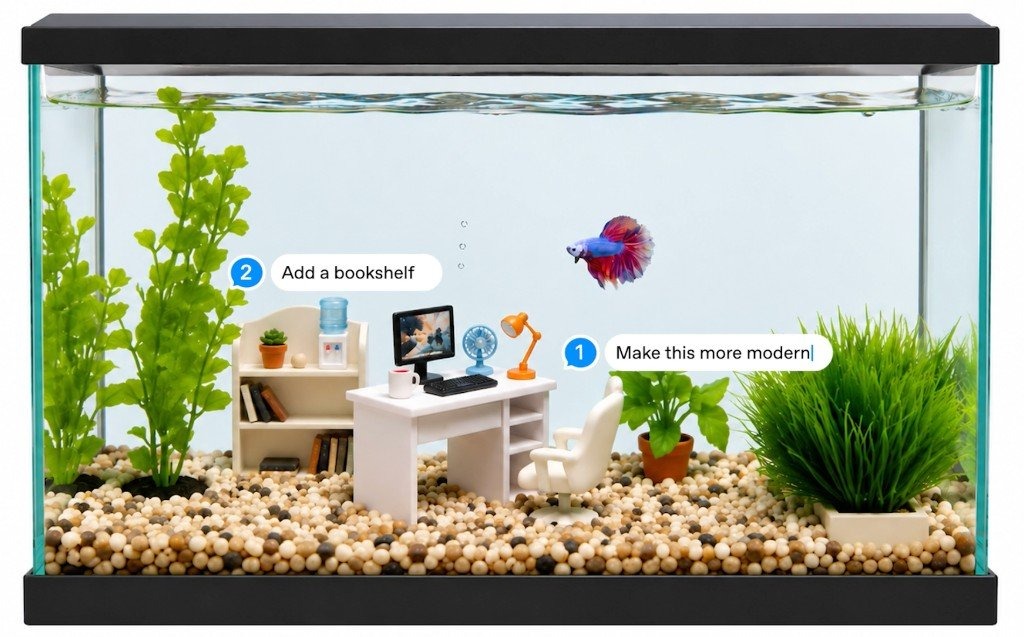
Execution is a hold, not a vibe. The reviewer opens the original upload, opens the new preview, and reads the corners the way they read a license packet. Images 2.5 belongs here as the chat that can take a drawn circle and a combine, not as the desk that signs the tile. Launch is free, including this model lane; when paid plans arrive later, paid-plan results allow commercial use and free-tier results stay personal. That later split does not change today’s hold. Today the mark either matches or the preview stays down.
That list fits on the review shift card. If the brief overflows the card, do not click generate. Images 2.5 can lift a glare when the stay list is honest. It cannot vote against a photographer who will search their own bug tomorrow.
The agent will not file a takedown, read a license packet, or decide whether a collection ID is the one counsel named. Uploads you do not own stay your problem after a prettier pass. If the source mark is already unreadable, another circle will not invent a true credit. Pull the marked original. A human still has to read the four corners before the tile is public.
Close the preview only while the corner mark still reads as the same claim. A melted bug is a rights event, however rich the bottle looks in the grid. Old crop and denoise still fail, just with a clearer audit trail. The agent belongs on the same desk when someone draws the defect, combines only the licensed stills, and leaves the claim outside the circle.
Host teams that already hold a marked original and need one glare gone will get a tile they can defend. Teams hoping a catalog sentence will stand in for a missing credit should stay in the upload queue and ask the photographer for the file. Images 2.5 can restyle a product around a claim that already exists. It cannot be the place that claim gets invented, completed, or wiped. Keep the boring tile that still names the owner. Ship that. The style sitting can wait.
