Physical Address
304 North Cardinal St.
Dorchester Center, MA 02124
Physical Address
304 North Cardinal St.
Dorchester Center, MA 02124


Selling a home is not only about location, price, and property features. In many cases, the first impression a buyer gets comes from photos and online listings.
A beautiful kitchen, spacious living room, or well-designed bedroom can immediately attract attention. But when a property is empty, outdated, or poorly presented, buyers may struggle to imagine themselves living there.
This is one of the biggest challenges real estate agents face today.
Traditional home staging can solve this problem, but it is not always practical. Renting furniture, hiring a staging company, and preparing a property can take time and cost thousands of dollars.
This is where AI interior design for real estate is becoming a useful solution. Instead of physically changing a property, agents can create realistic visual concepts that help potential buyers understand what a space could become.
AI does not replace traditional staging or the expertise of real estate professionals. Instead, it gives agents a faster and more flexible way to present properties, especially in competitive markets.
Here are several ways real estate agents are using AI interior design to make listings more attractive and improve the selling process.
One of the biggest problems with vacant properties is that empty rooms often feel smaller and less inviting.
When buyers see an empty bedroom or living room, they need to imagine:
Not every buyer has strong visualization skills.
A completely empty room may look ordinary online, even if the property itself has great potential.
AI interior design helps solve this problem by allowing agents to create furnished versions of empty spaces.
For example, an empty living room can be transformed into:
Instead of asking buyers to imagine the possibilities, agents can show them.
This creates an emotional connection before the buyer even visits the property.
Many properties are not sold because they are bad homes. They simply do not present their potential clearly.
An older house may have outdated furniture, dark colors, or an interior style that does not appeal to modern buyers.
However, the structure of the home may still be excellent.
AI allows real estate agents to show what the property could look like after renovation.
For example:
A dated kitchen can be visualized with modern cabinets and better lighting.
An old bedroom can be redesigned with contemporary furniture.
A plain living room can be transformed into a more attractive space.
This approach helps buyers look beyond the current condition and imagine future possibilities.
For agents selling renovation properties or older homes, this can make a significant difference.
Online listing platforms are highly competitive.
A buyer may scroll through dozens or hundreds of properties in a short time. If the first few images do not catch attention, they may never click to learn more.
High-quality visuals can influence whether someone:
AI interior design gives agents more options when preparing listing materials.
Instead of only showing empty rooms, agents can include different visual concepts that highlight the property’s possibilities.
For example:
A small apartment can be presented as a stylish urban home.
A large open room can show multiple furniture arrangements.
A new construction property can display different interior styles.
This helps listings stand out without requiring a full physical staging process.
Different buyers are attracted to different lifestyles.
A young professional may prefer a modern minimalist apartment.
A family may imagine a comfortable space with practical storage.
A luxury buyer may look for premium materials and elegant details.
One advantage of AI is that the same room can be visualized in multiple ways.
A real estate agent can create different versions of the same space:
This allows agents to understand which presentation may appeal most to their target audience.
Instead of using one fixed staging approach, agents can adapt visuals based on the type of buyer they want to attract.
Remote buying has become increasingly common.
Some buyers search for homes from another city or even another country. They may not be able to visit every property in person before making a decision.
In these situations, visual communication becomes even more important.
AI-generated interior concepts can help remote buyers understand:
For international buyers or investment properties, these visuals can provide additional confidence during the early decision stage.
Real estate agents often need to explain possibilities to sellers.
A seller may ask:
“Should we renovate before listing?”
“Will changing the furniture help?”
“What style should we use for staging?”
Instead of explaining ideas only through words, agents can use AI-generated visuals to show possible outcomes.
This makes conversations clearer.
For example, an agent can demonstrate how a living room could look with updated furniture or how a different layout could improve the feeling of space.
Visual communication helps clients make decisions faster and understand the value of professional presentation.
The role of AI in real estate is not limited to creating pretty images.
The most valuable use is helping professionals communicate possibilities.
An AI virtual staging tool can help agents quickly prepare different versions of a property without renting furniture or organizing physical staging.
Compared with traditional staging, AI solutions offer advantages such as:
However, quality still matters.
Real estate visuals should look realistic and match the actual property. Overly unrealistic designs may create disappointment during property visits.
The goal is not to mislead buyers, but to help them better understand the space.
While interior images help buyers imagine the atmosphere of a home, understanding the actual layout is equally important.
A beautiful room is not enough if buyers cannot understand how spaces connect.
This is where Floor Plan Maker can support real estate presentations.
With its floor plan creation and interior visualization features, agents can create clearer property concepts by showing:
For example, an agent listing a newly built apartment can use Floor Plan Maker to present not only the current layout but also possible interior arrangements.
This gives buyers a better understanding of how the property can be used.
Combining floor plans with AI interior design creates a more complete presentation experience.
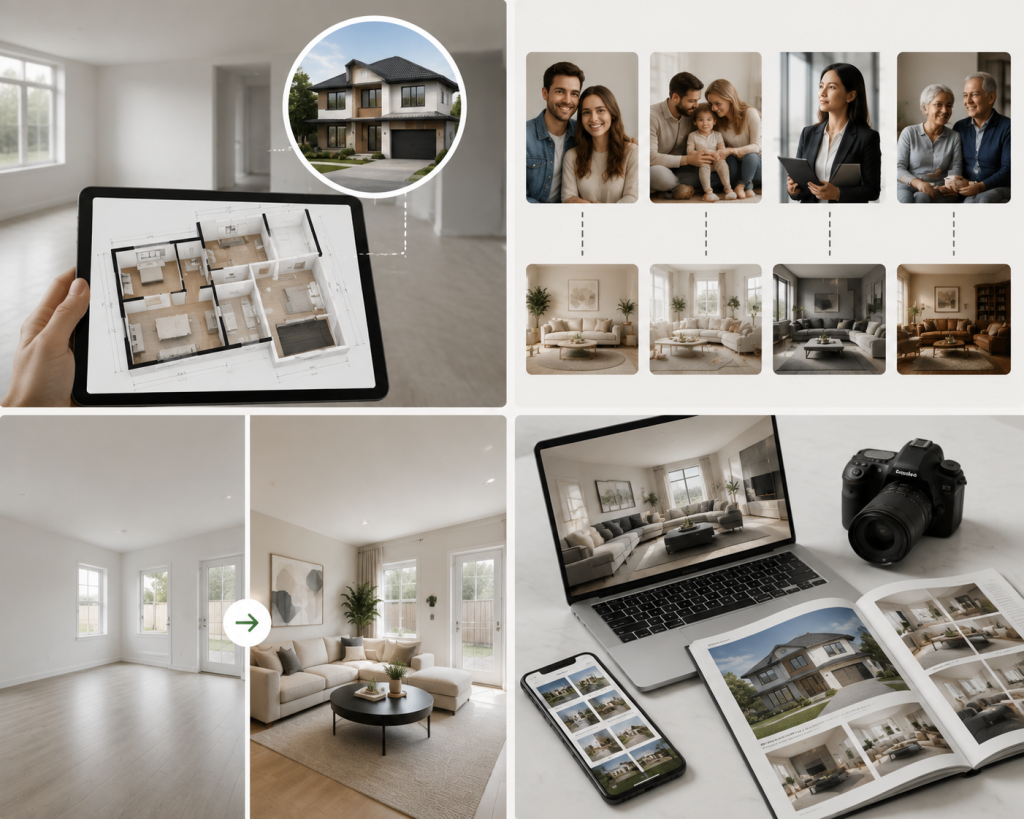
To get better results, agents should keep several things in mind.
AI designs should reflect the actual size, structure, and features of the property.
Choose styles that match the likely audience instead of creating random designs.
AI visuals should inspire buyers while remaining realistic.
Great images work best together with professional photography, detailed descriptions, and strong communication.
Real estate has always been about helping people imagine a future home.
AI interior design makes that process faster and more accessible by helping buyers visualize possibilities that may not be obvious from empty rooms or outdated interiors.
For real estate agents, AI can improve property presentations, attract more attention online, and create better conversations with clients.
The future of real estate marketing is not about replacing traditional skills. It is about using better tools to communicate value more effectively.
By combining professional expertise with AI-powered visualization, agents can help more buyers see not only what a property is today, but what it could become.
Yes. Many agents use AI to create furnished concepts, showcase renovation possibilities, and improve online property presentations.
Not completely. AI virtual staging is a faster and more flexible option, but physical staging may still be useful for certain properties and buyer experiences.
AI helps buyers understand the potential of a property, improves listing visuals, and makes it easier for them to imagine living in the space.
